
Animal health consultancy
Insight to action in animal health
Mujika helps organisations turn complex evidence into practical action across animal health, livestock systems and companion animal care. We combine scientific rigour, digital innovation and real-world understanding to support better decisions for business, policy and practice.
With expertise in One Health, epidemiology, digital technologies, social listening and data-driven analysis, Mujika works with partners to translate insight into solutions that are useful, relevant and actionable.
What we do
How we work
Mujika works through an agile and collaborative model, convening the right expertise for each project and working with trusted partners across science, technology, and industry. This flexible approach allows us to respond quickly to complex challenges and translate evidence into practical solutions.
Mujika is led by Professor Alasdair (“Alex”) Cook, a veterinarian and epidemiologist whose career has encompassed farm animal practice, international development and senior roles in government and academia. He now focuses on applying science, data and digital innovation to improve animal health systems in an increasingly connected world.
About Alex

Professor Alasdair (“Alex”) Cook is a veterinarian and epidemiologist with more than three decades of experience working across farm animal practice, international development, government service and academia. Early work in veterinary development projects in the Middle East, Africa and Central America helped shape a longstanding interest in livestock systems, One Health and the practical realities faced by farmers and veterinary services in different cultural and economic contexts.
He later held senior roles in veterinary epidemiology and disease surveillance in the UK, including leadership of national surveillance programmes and research on endemic and emerging animal diseases.
Today Alex works through Mujika to help organisations apply science, data and emerging digital technologies to improve animal health systems and livestock production. His work draws on experience of collaborating with diverse partners across research, policy and industry, including current advisory roles with the UK Trade and Agriculture Commission and the Food Standards Agency’s Advisory Committee on the Microbiological Safety of Food (ACMSF).
His work with farmers, researchers and veterinary services in a wide range of economic, social and cultural settings has reinforced the importance of listening, working in partnership and respecting local knowledge and priorities.
What’s in a name?
In the 1990s, while working on a project estimating the prevalence of bovine tuberculosis in cattle belonging to the baTonga people of Zambia, members of the local team told me that my surname “Cook” translated into mujika in their language. When I established my consultancy, I adopted it as my company name — a small reminder of the international nature of my work in animal health.

Current work
Mujika’s current work includes advisory and research collaborations across animal health, livestock systems and emerging digital technologies. Recent projects have involved partnerships with organisations such as Zoetis, Agsenze and Arpexas, as well as UKRI-supported initiatives exploring climate-smart cattle systems and digital innovation in livestock production.
Associates

Simone Roncada is an agribusiness consultant and speaker with practical experience in livestock production systems in Brazil and international settings including Angola and Mozambique. Her work has focused on Zebu cattle and the development of tropical livestock production systems in commercial environments. Simone works across livestock enterprises involving herd management, zootechnical data, animal health and breeding programmes. She supports collaboration between businesses, research institutes and development partners to advance practical livestock initiatives across Brazil, Latin America and Africa.

Dr Joaquin Prada is a mathematical modeller specialising in epidemiology across human and animal populations. He applies multidisciplinary approaches combining mathematics, statistics, computing science, economics and social science to generate practical insights for disease surveillance and control. Joaquin works with academic, public and commercial partners to translate analytical insights into evidence that supports sustainable policy and real-world decision-making.

Sitira Williams is an applied livestock researcher with nine years’ experience in animal health and production systems, particularly in low- and middle-income countries. Her work focuses on the social and behavioural factors influencing the uptake of animal health technologies. She has managed international research projects on livestock disease priorities, diagnostic needs, and barriers to vaccine use in small ruminants and poultry in East Africa. Sitira specialises in qualitative and mixed-methods research, stakeholder engagement, and thematic analysis to support practical improvements in livestock health and productivity.
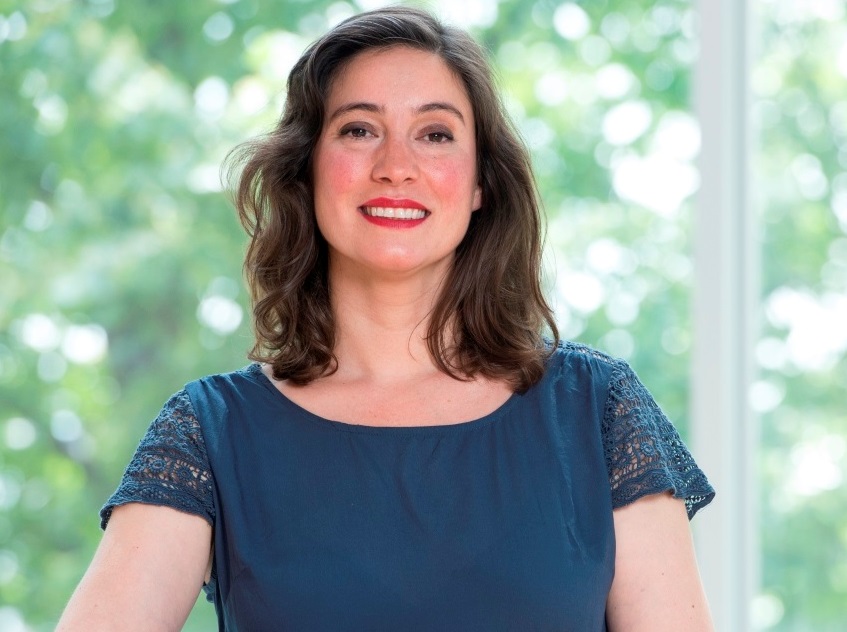
Constanza Gomez Alvarez is a veterinary surgeon specialising in animal locomotion, biomechanics and gait analysis. Her work focuses on musculoskeletal health, rehabilitation and the objective assessment of movement in animals. She combines clinical and research experience to support evidence-based approaches to diagnosis, recovery and animal welfare in both companion and performance animals.

TheBioChain is a secure data infrastructure platform for biological systems, built to ensure data integrity, traceability, and auditability from the point of capture. Its immutable architecture creates tamper-evident records with complete provenance and audit history, supporting regulated environments across livestock, life sciences, and research.